Spacetime, Then Locality
Before we can have distinct systems, we need a "where" and a "when." Spacetime is the ultimate interface that creates the possibility of separation. In general relativity, spacetime is not a static background box; it is a dynamic structure. It creates the interface between events. Without spacetime, there would be no separation, everything would be superposed on everything else.
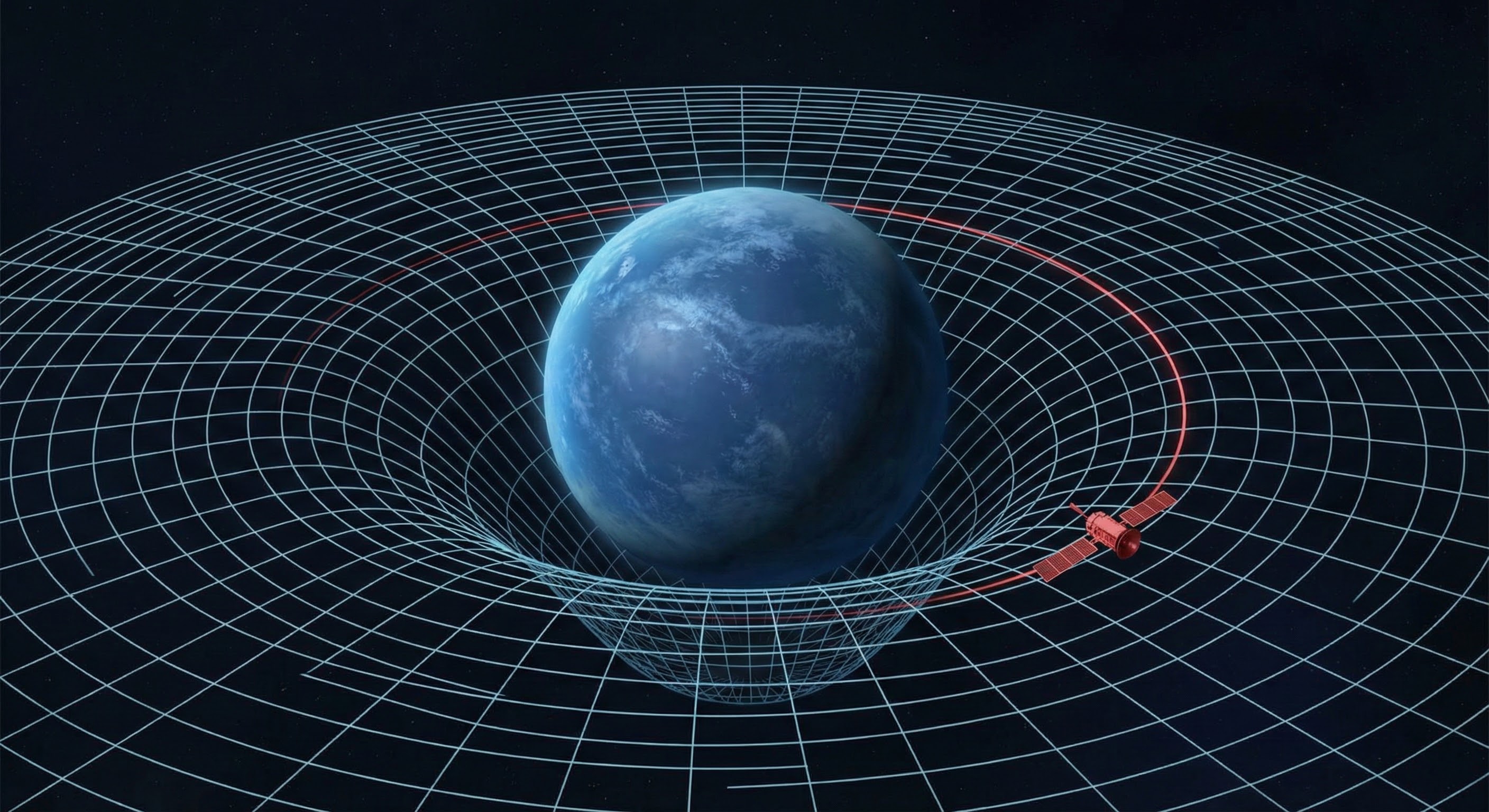
As shown above, curved spacetime illustrates how mass and energy shape the fabric of space and time, creating the interface that governs motion and interaction. Within this geometry, locality acts as a crucial constraint: influences cannot propagate faster than light. Locality is the interface that prevents everything from happening at once. It allows systems to be essentially separate while still able to interact via signals.
Locality refines that picture: influence must travel through space, and that travel takes time. It enforces decoupling, creating the causal horizons that let different regions of the universe carry their own dynamics without instantaneous coupling to everything else.
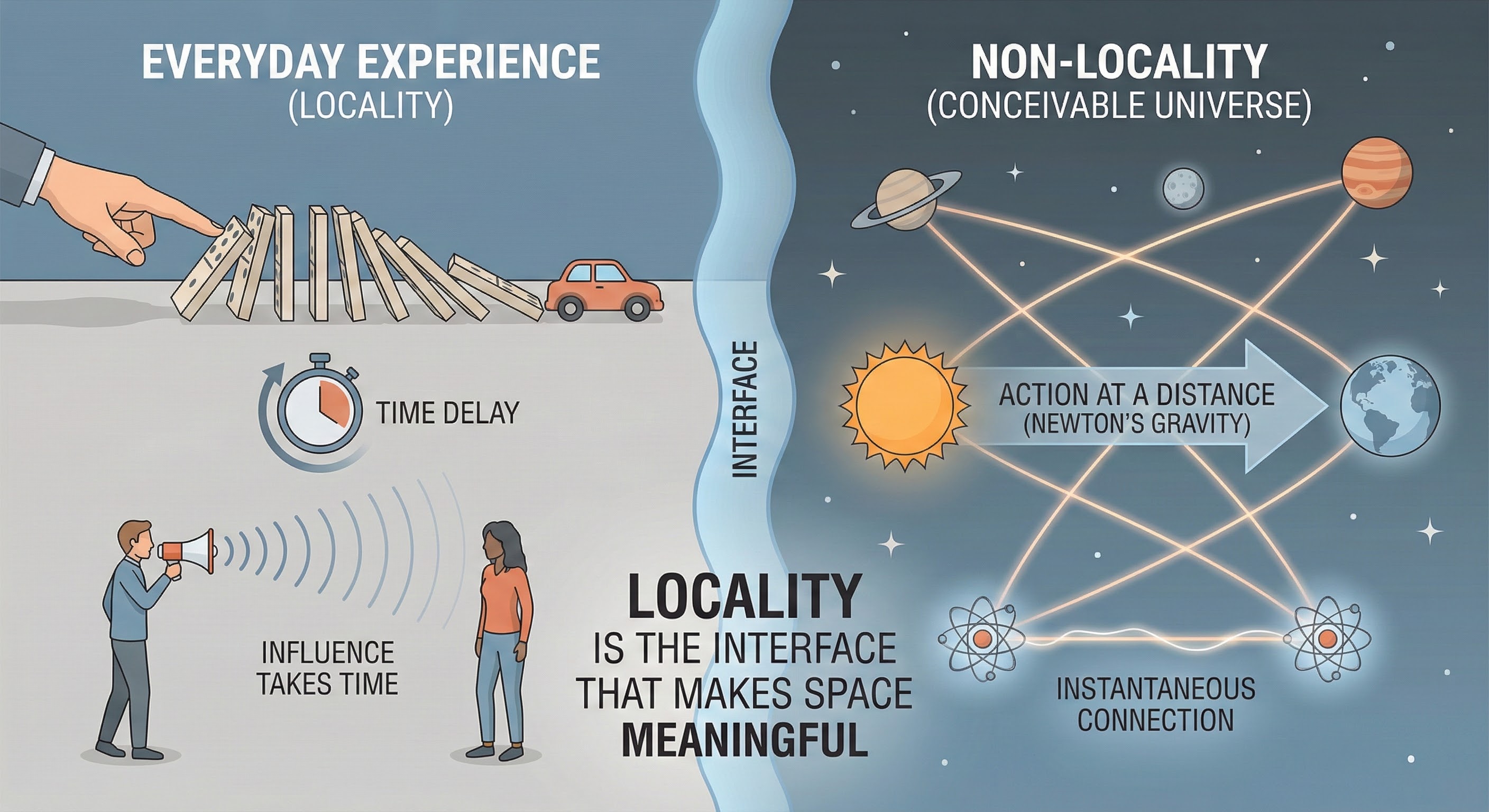
As shown above, the locality illustration emphasizes signal-limited connection across distance: separation stays meaningful because interaction is channeled through propagation in spacetime rather than instantaneous coordination everywhere at once.
Causality and Structure
Spacetime interfaces create the conditions for causality. Events can only influence other events if they are within each other's light cones. This creates a structure of possibility: some interactions are possible, others are not, based on their spatiotemporal relationships.
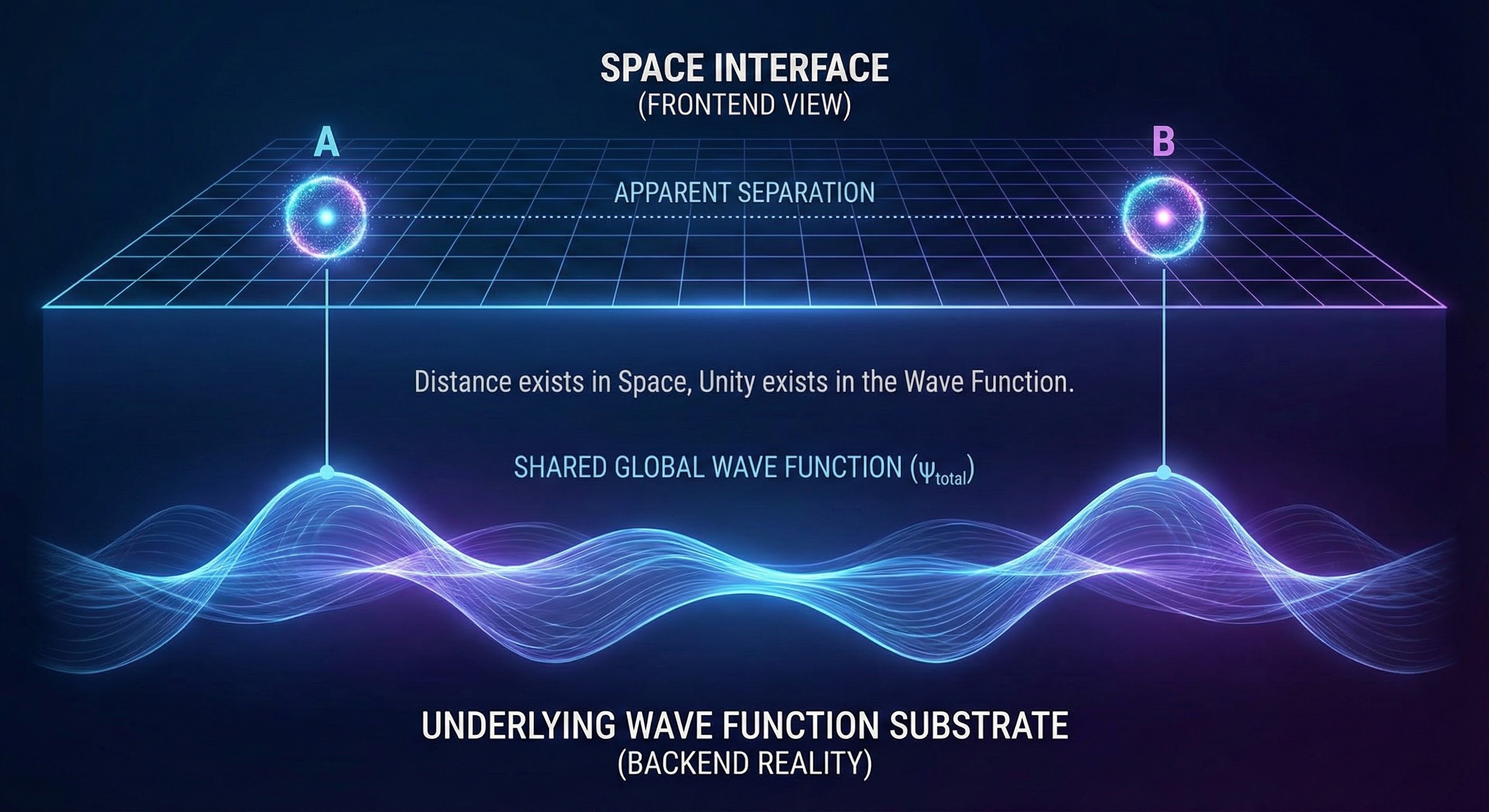
As shown above, quantum entanglement presents a fascinating challenge to our intuitive understanding of locality. This illustration shows how entangled particles can be separated in space yet remain unified in their quantum state. While this seems to violate locality, it actually reveals a deeper truth: the interface operates at the level of the wave function, not at the level of individual particles. Entanglement shows that spacetime interfaces can create non-local correlations while still maintaining the causal structure that prevents faster-than-light communication, demonstrating the subtlety of how interfaces constrain possibility.
This structure enables the emergence of stable patterns. Systems can exist as distinct entities because spacetime interfaces prevent everything from being immediately coupled to everything else.
The Foundation for Everything Else
The first living cells did not need to invent locality. Space and time had already created it. They did not need to invent energy gradients. Thermodynamics had already created them. They did not need to invent stability. Physical interfaces had already created it.
Spacetime interfaces provide the fundamental framework that makes all other interfaces possible. They create the conditions under which biological, cognitive, and semantic interfaces can emerge and function.
Key Concepts
- Locality: Constraint that limits how far influences can propagate
- Causality: Structure created by spacetime interfaces
- Light Cones: Boundaries of possible influence
- Spacetime Structure: Framework that enables separation and interaction
- Separation: Ability for systems to exist as distinct entities
- Interaction Framework: Conditions that make all other interfaces possible